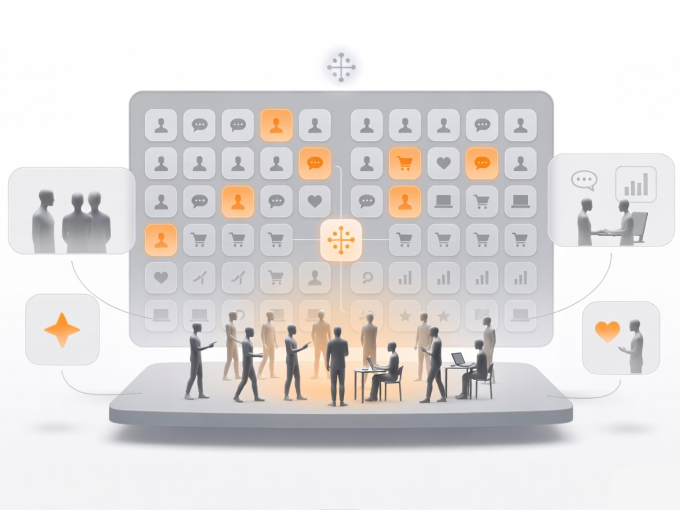


What would happen in case AI is able to act autonomously- who is right? This is the central question of an emerging ethical debate on the topic of agentic artificial intelligence. The systems that do not merely react to some input but can take independent decisions and even establish their own objectives can be called agentic. With the growing sophistication of such systems, very significant questions are coming in: how do we make them behave in a fashion that does not contradict human values, and who can bring them to accountability? Chimera Technologies is becoming one of the responsible AI innovators, creating affordable, human-centered AI applications: the applications that operate independently yet are still based on ethical design.
1. What Makes AI ‘Agentic’?
In many ways, traditional AI systems are reactive: they take in input, calculate an answer, and give out an output. On the other hand, agentic AI is able to take initiative and make decisions, prepare in the long term, and operate without human instructions. It is this change in behavior whereby the autonomous AI is receptive to proactiveness that determines the new generation autonomous AI.
This is a vision that is already being addressed at Chimera Technologies in its enterprise solutions. The agent-based systems are able to complete workflows, negotiate among various business agents and change their behaviour in real time. Chimera enables organizations to automate multi-step processes that are intricate in nature and remain in tune with human objectives by creating the models that replicate the real, multi-actor environment.
2. The Ethical Crossroads
There are many ethical risks associated with agentic AI. First, accountability: who is to bear the responsibility in case something goes wrong when an autonomous system makes a decision? Second, bias: agentic systems can also propagate inequality, which manifests in the form of unfairness, into their training data, which only enforces discrimination within their decision loops. Third, control: when a system is turned to operation on its own, it has the risk of drifting or evolving in a manner not well comprehended.
Chimera will overcome these difficulties by integrating transparency and auditability into their decision making structure. The decisions of every agent are recorded in the form of logs, and the main decisions can be explained. People are able to peruse the reasons why a specific course of action was taken, its reasoning and take interventions where necessary. Chimera makes its autonomous systems accountable by letting external audits be employed.
3. Building Ethical Governance Frameworks
Within the global context, AI is rapidly being governed in an ethical way. Regulations like the EU AI Act are coming into force in 2025 and categorize AI systems according to the level of risk and give more strict duties to high-risk applications. (E.g. high-risk systems should comply with the standards of transparency, safety, and documentation).
Meanwhile, in the United States, NIST (National Institute of Standards and Technology) has released its AI Risk Management Framework (AI RMF 1.0) which is voluntary but structured recommendations to manage AI risk throughout the system lifecycle.
There are four key functions outlined by the NIST framework Govern, Map, Measure, and Manage that facilitate an ongoing risk analysis and refinement cycle.
It also points out the main features of reliable AI, including accountability, transparency, fairness, explainability, and resilience.
Chimera uses a governance-by-design approach. Its teams incorporate ethical validation in the system architecture at the earliest phases of its development, they implement the NIST-corresponding lifecycle model and invest in continued risk evaluation along with the progression of the system.
4. Aligning Autonomy with Human Values
There must be careful design in balancing between autonomy and human values. Chimera is a system providing human-in-the-loop (HITL): although the agents are autonomous, human supervisors have an opportunity to influence or override such decisions. This ensures that critical judgments are grounded on human morality.
In addition, explainable AI (XAI) methods are at the core of Chimera architectural design. The system also makes its reasoning visible in forms easy to understand to users, not in raw code or scores, but in readable explanation form: I did it because I predicted that and the likes. This instills confidence and makes decisions, not some black boxes.
Throughout its AI governance strategy, Chimera also fosters frequent ethical probe and consultation with the stakeholders. The ability to integrate both innovation and responsibility has made the company make sure that its autonomous AI does not conflict with human values.
Conclusion
With agentic AI on the rise, there is a challenge to reassess control, responsibility, and trust in intelligent systems, and redefine them. Because AI is able to perform its own actions, society has to determine not only which actions they are permitted to execute, according to whom, they should act and why. Autonomy in no way implies that one should operate without control and regulation; it is about being clear, safe and in line with human needs.
Well managed, highly open facade AI, with a regular ethics audit could ensure active role consultant use will be a force of positive change and not cause of heightened uncertainty. It is not about restricting what AI can accomplish but an attempt to define its behaviour in a way that will support human ability but not interfere with human values.
By ethical engineering, Chimera Technologies makes AI a force of awareness, and purposeful to allow an increasingly autonomous AI to move forward.