
Fintech is an industry largely driven by trust, regulation, and money. Not just offering services to its customers, financial institutions must also ensure they comply with rules, control risks, and earn customers’ trust. But this balance is hard to maintain as their current traditional AI systems often add to complexity by failing to justify decisions with clear, auditable reasoning and handle regulatory expectations. A Stanford University report found that 65% of organizations report a primary barrier to AI adoption as “lack of explainability”.
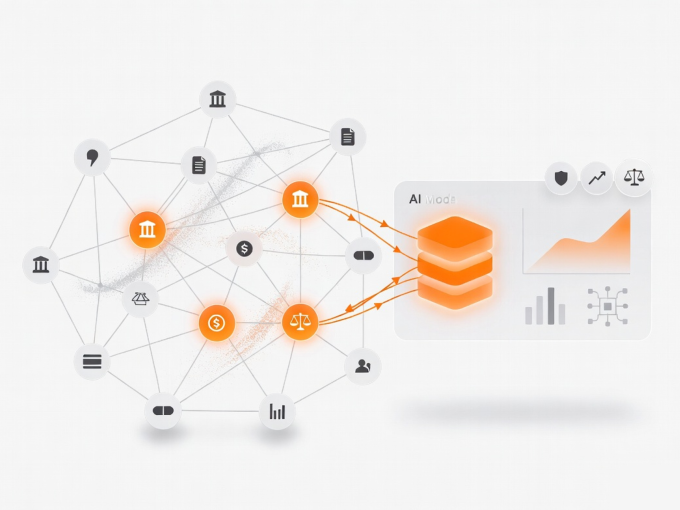
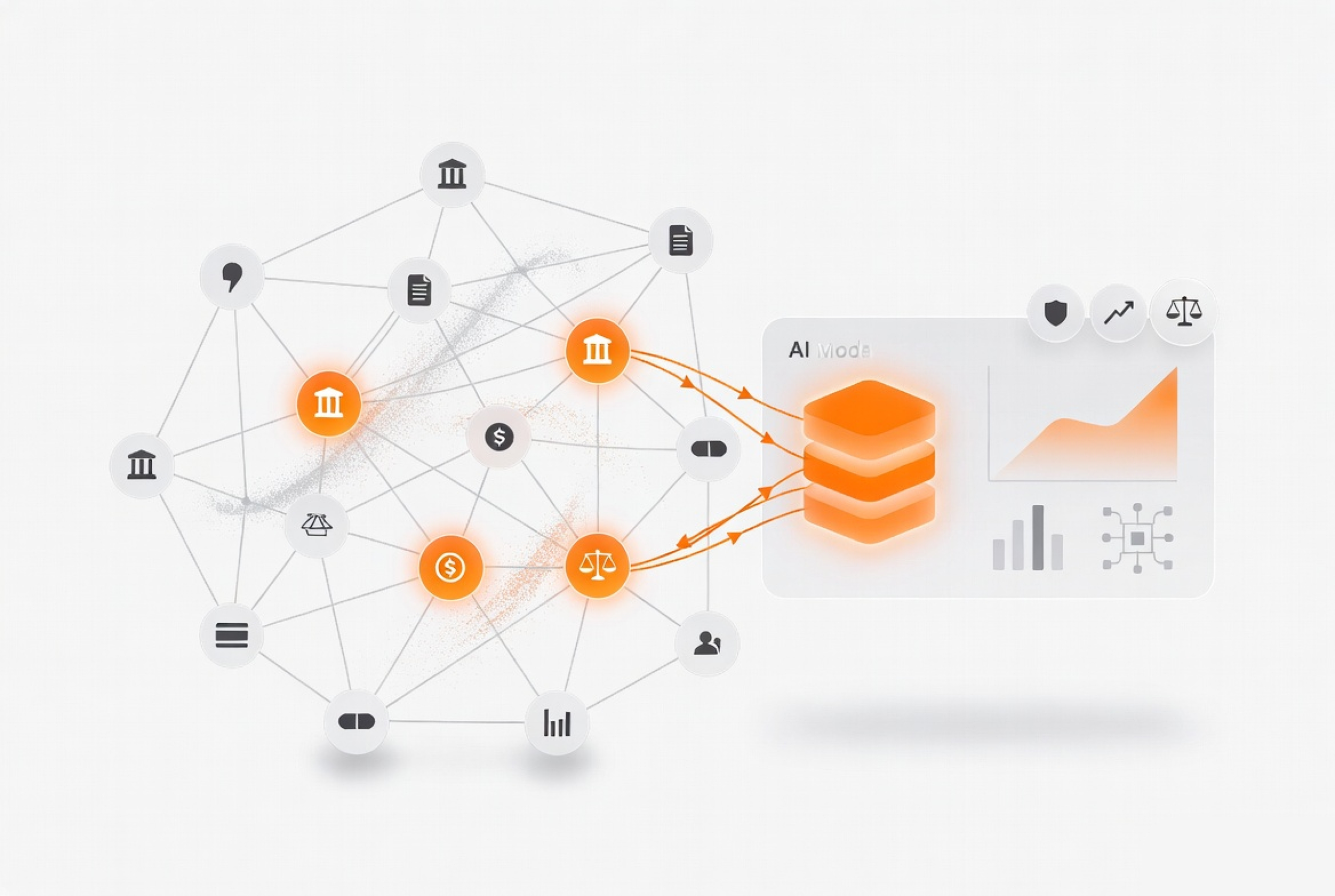
Graph RAG (Retrieval-Augmented Generation) changes this by focusing on connecting entities rather than just data points. It retrieves relationship-based evidence from graphs and explains it in clear language using LLMs. Graph RAG is emerging as a practical foundation for safer, faster, and more transparent financial intelligence. You will see how in this blog.
Why Graph RAG is Important in Fintech
The fintech industry involves things like money flows, ownership, transactions, and device linkages. Traditional systems can only rely on data available in spreadsheets, tables, and documents. They cannot follow relationships across multiple steps or think logically. This means it cannot solve relationship problems like money laundering and fraud, including regulatory concerns.
Below are some reasons why financial intelligence needs Graph RAG:
- Relationship-Aware Querying: Usually, Graph RAG looks beyond individual records and focuses on how things are connected deeply. Instead of returning isolated text, it follows links between entities, such as an account, the device used, the company behind it, and the people involved. By doing this, it uncovers patterns that traditional search cannot.
- Fraud & Anomaly Detection: Detection of fraud involves proper analysis and identification of complex networks of transactions or identities. This is exactly what Graph analysis can help fintech systems do. Graph-based tools uncover people or accounts coordinated together to commit fraud, including mule networks, by exploring how entities connect.
- Traceable Compliance: Financial regulation demands transparency. With Graph RAG, every decision can point back to a network path of entities and relationships. Compliance teams see exactly why a response was generated, not just that an alert was raised. Updating regulatory logic (e.g., adding a new global AML rule) becomes a matter of modifying a graph node or edge, instantly refreshing the retrieval logic across the system.
- Data Unification: Graphs bring together isolated sources like transactions, customer records, devices, public records, etc into one schema. Graphs now enable proper and real-time insights.
What is Graph RAG?
Graph RAG is simply an evolved form of traditional RAG. It can recover context and insights from nodes of connected data, which is nothing but knowledge graphs.
- It follows two steps while functioning. It starts off with getting the most relevant information, followed by an explanation in human language.
- It generally sources information from a graph that maps real-world entities like accounts, people, companies, or regulations, and then shows how they are connected through transactions, ownership, or shared devices.
- These connected facts are sensed by LLMs (language models) and then explained to people clearly.
Core Components of a Graph RAG System in FinTech
a. Knowledge Graph Layer:
It is called so because it stores the needed information. This is the first layer, a graph database (like Neo4j or TigerGraph) that stores entities and relationships from internal systems like KYC, transactions, etc and external data like a list of banned individuals, a list of owners who own and control a company, etc.
b. Graph-Based Retrieval
Instead of naive keyword or vector search, retrieval uses graph queries to fetch the most relevant, connected context. This means answers are backed by actual relationships. They are not backed by similar text from a document.
c. LLM (Reasoning & Explanation)
The LLM’s role is interpretation and synthesis. It explains what is in the retrieved graph in human-understandable language, summarizing network patterns, and giving insightful conclusions that auditors or compliance officers can easily read and trust.
d. Governance & Guardrails
Graph RAG is expected to operate with strict controls. This includes controlling who can see what, tracing every retrieval and answer, and model checks to ensure outputs adhere to compliance standards. The compliance checks take place automatically instead of after the fact, as teams often have regulatory rules directly built into the graph.
High-Impact FinTech Use Cases
Below are some of the use cases for Graph RAG in fintech:
- Fraud & AML: Co-ordinated fraud rings get flagged by tracing shared devices and accounts, multi-party connections, and ownership. Most false positives are eliminated by Graph-based AML analytics, which can also expose hidden clusters that flat analytics miss.
- Credit Risk & Underwriting: It also helps in combining the customer behavior along with transaction data and finding out risks that traditional credit scores usually miss.
- Regulatory Compliance & Audits: As RAG is enabled with a graph, it is easy for it to explain narratives for complex regulations like AML, PSD2, or Basel, reducing manual audit work.
- Asset Management & Insurance Claims: Graph networks reveal risk correlations across portfolios or link claims to prior history, accelerating investigations.
Business Impact and Value of Graph RAG in FinTech
- Stronger Decisions: Decisions are taken with the help of insights from real data relationships and are easier to defend with regulators and auditors.
- Quick Fraud Detection: Graph RAG can identify and bring to your notice the complex fraud patterns that would take traditional systems days to spot, accelerating mitigation and minimizing financial loss.
- Audit Efficiency: The integrated graph has a built-in traceability that simplifies audit preparation and report generation. It can also reduce compliance costs and risk of penalties.
- Operational Efficiency at Scale: Automating relational analytics helps teams to get less distracted and focus on real risks that may impact productivity and compliance.
- Better Customer Trust & Experience: Decision-making that happens with context helps in carrying out tailored customer interactions.
Actionable Steps: How FinTech Teams Can Start with Graph RAG
Follow the steps below to start with Graph RAG at your organization:
- First, highlight decisions across areas like fraud, compliance, etc, where relationships matter most.
- Identify where relationship data exists tacitly and bring it into a unified model.
- Start building a financial knowledge graph with small core entities (accounts, transactions, devices, customers).
- Then, enable layer graph-based retrieval for key queries that respect connections.
- Use LLMs for explanation. Let the LLM explain evidence rather than drive decisions.
- Embed access controls, audit logs, and compliance logic to bring in governance from day one.
- Measure Business Impact. Track reductions in false positives, investigation time, and compliance effort.
Conclusion
Graph RAG represents a practical leap in financial intelligence. It unifies relational data with explainable AI to power transparent, risk-aware decisioning.
- Chimera is an enterprise-grade Graph RAG builder. Our strengths include:
- Intensive knowledge of Neo4j, TigerGraph, and DGraph.
- Writing scalable and variably-capable graph designs.
- Creation of ingestion pipelines of normalized data that is clean.
- Stability in the process of governance, versioning, and maintainability.
Become a financial ecosystem that grows more interconnected and complex with Graph RAG as a core capability with Chimera. Connect with us today.