
The online world is demanding a new form of intelligence. In addition to chatbots that reply to questions, we should have systems capable of imitating people. The increased requirement of human behaviour simulation is based on a business issue that is critical: guessing is costly. Bringing a product to the market, a training course or a new UI to the market without having the slightest clue of how people will respond is an enormous gamble.
This need generates the competition to design intelligent agents, not merely instruments, but computer-based agents with a personality. The final objective is AI that mirrors real user actions and reflects the joyful unpredictability and intricate decision making of human beings.
Tiny Troupe is the direct response to this urgent demand, the sophisticated and accessible solution to this urgent need, that is, a library to create not a single agent, but the entire interactive society.
What Is Tiny Troupe?
Tiny Troupe is essentially an AI library, and referring to it is comparable to referring to a movie studio as a camera. It is a design toolkit that has devoted its time to authoring and directing virtual personas. You determine the characters, their nature and the location, and Tiny Troupe offers the stage and the laws of reality in which they have to act.
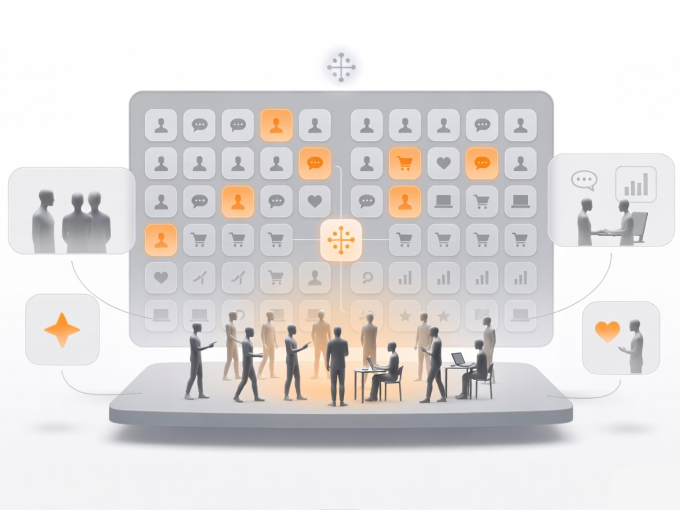
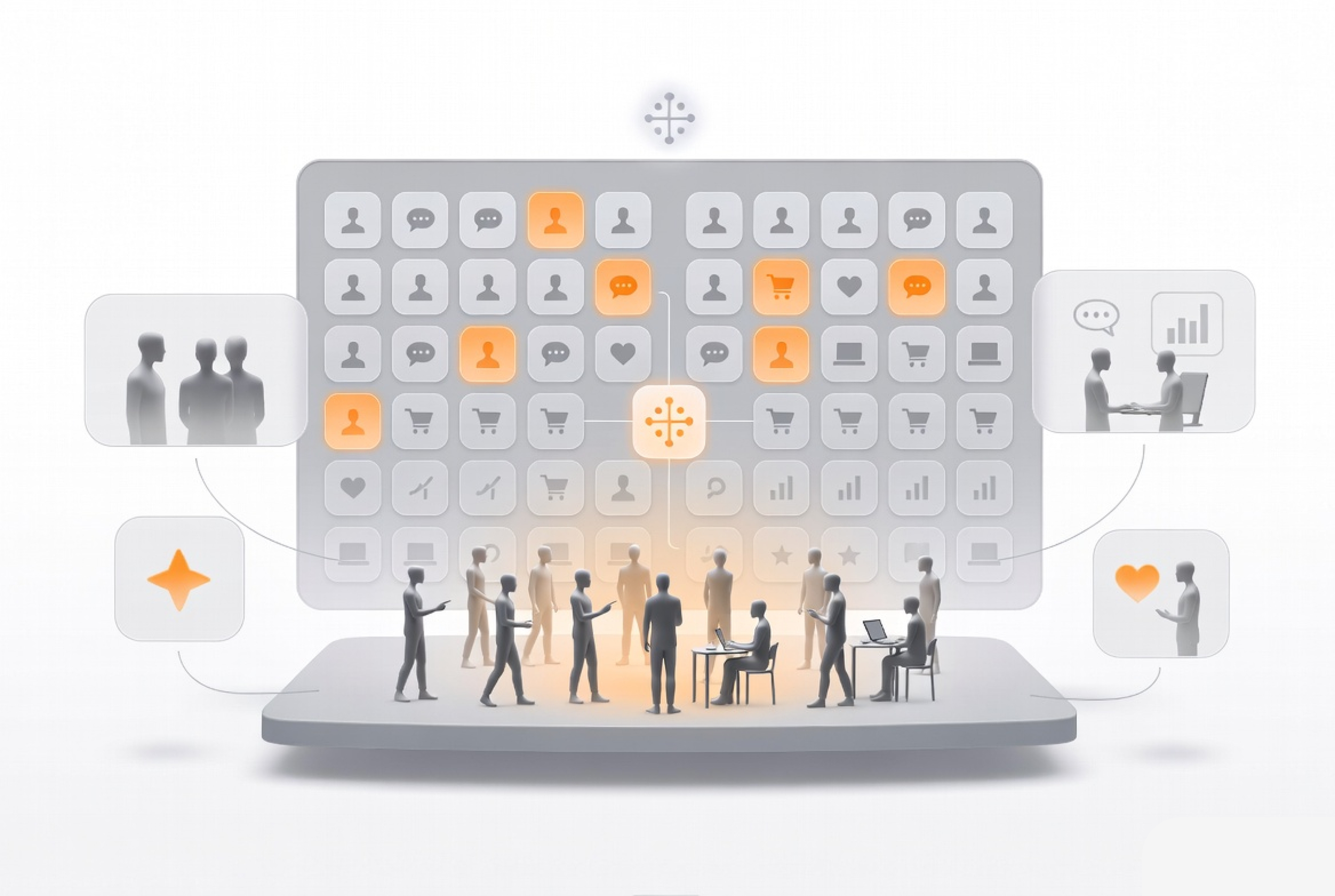
The essential strength of it is that it allows multi-agent interactions, where dozens or hundreds of these personas can interact, coexist, and affect each other at the same time. It is a transformational capability with regard to testing and modelling. And it enables you to develop a living breathing prototype of your user base or some group of people you might be interested in, seeing new kinds of behavior that no single-agent test can ever predict, making abstract user stories concrete in some digital performance.
How Tiny Troupe Works?
The invention of the engine makes its strength obvious. Behaviour scripting is developed first with possible rules and actions established. The model of decision taken by each agent is that of a dual emotion/logic-based decision model. The thought of a person choosing to purchase a product is to be taken into consideration: logic evaluates the price and the features, whereas emotion considers the desire, trust or the current mood.
These internal states are continuously transformed through the reaction of agents responding to environment triggers- a price change, a notification or a comment of another agent. All this happens in custom-made simulation environments you make, such as a digital twin of your application interface or a virtual town square. In this case, agents interact in a more natural way, they form opinions, develop trends, and maneuver in situations which give a vast stream of behavioral data.
Key Features of Tiny Troupe
It is the strength of the library that covers the automation and simulation between mere automation and reasonable simulation. Deep persona modelling allows you to make agents of different ages, professions, personality (e.g. extroverted, cautious), and goals and ambitions that change over time. This is supported by cognitive reasoning, enabling agents to think with the help of memory access, plan, and learn.
The layer of emotional response modelling is extremely vital, since it determines the reaction to events – get frustrated over a mistake, be happy at a reward, etc. – it makes the behavior look real and not mechanical. Lastly, it is low-code integration so that this is not relegated to AI labs.
Developers, and even the more advanced product managers, can incorporate these advanced simulations directly in their workflows with easy to use APIs and visual tools making high-end behavioral AI more democratic.
Why Is Tiny Troupe a Breakthrough?
This is such a paradigm shift in developing and launching anything that is destined to people. First, it provides realistic simulations that are more detailed than the static user personas or simple analytics dashboards. This can be used directly to enable early UX testing even at the concept stage and see the virtual users having problems with a prototype before a single line of production code is written.
The outcome is a massive decline of the conjecture in designing products, which is a waste of colossal resources in product post-launch corrections. Other than products, its usefulness is also evident in the safe crisis rehearsal of the corporate training, in risk modelling of financial situations, and in creating interactive product prototypes which investors or stakeholders can actually feel, which makes it an all-round engine of innovation.
Use Cases Across Industries
The apps are disruptive in industries. In e-commerce and UX design, teams can model thousands of customer behaviours to stress-test checkout flows or adoption of a new feature and understand where people are dropping off that cannot be seen in A/B testing. It is employed by financial institutions to model client response to a new investment product or a product change in terms to predict sentiment and possible churn with a high level of accuracy.
As corporate training and HR, it provides immersive environments in the development of soft-skills where managers have to train by having a conversation with an emotionally responsive AI agent. Virtual personas in market research start a novel period of exploration and test products and pricing plans along with ad campaigns against a digital panel (which is diverse and ever accessible). It speeds up the process of insights and minimizes costly mistakes.
Challenges & Considerations
Naturally, such technology that is a power needs to be used responsibly. The major issues are that modelled personas may be biased, and such a bias may distort the results, especially when not managed properly.
Another one is the danger of drift in simulated behaviour, where the agents develop unintentionally. The most important issues in the case of behavioural cloning and privacy are ethical. Business organizations should respond to them by checking the personas of their agents, setting their limits in simulation, and having humans to supervise the use of these tools to see that they are being used in a transparent way and with positive intentions.
How Chimera Uses Tiny Troupe for Clients?
At Chimera, we have mastered the use of this technology to achieve physical client success. Our behaviour simulation building is very strong and can be customized to certain business questions. In the case of a retail customer, we could model the in-store traffic to make an optimum layout.
We are also keen on enhancing the product features by doing deep user modelling and isolating pain points that the conventional testing failed to see. Finally, we make it easy by speeding up the decision making process through scenario planning so that leaders can have a crystal ball with lots of data to make clear, long term strategic decisions.
Conclusion
Tiny Troupe is much more than a smart AI library; it is a game-changer of digital innovation in the future. It enables companies to leave a reactive behind and become predictive, appreciating human interactions in a secure, expandable and informative digital environment. It opens up quicker progress, wiser plans, and friendlier products by addressing the issue of human behavior with a complexity that can be simulated and controlled. To any organization intending to be in the front not behind, learning this simulation technology is no longer a luxury, but the second very important step.