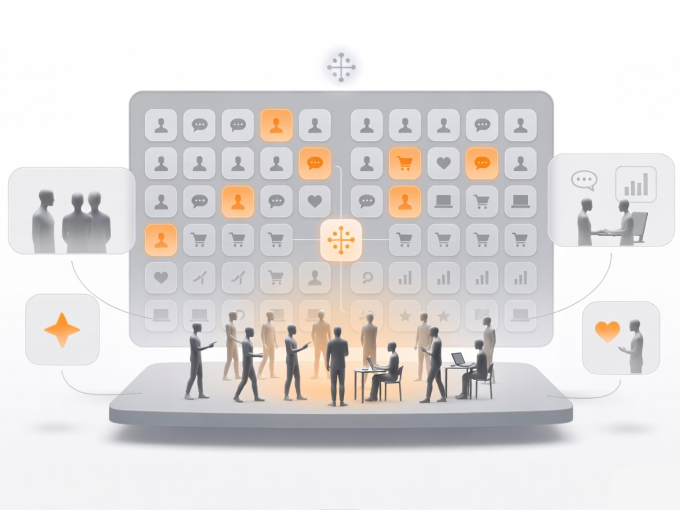


In 2025-26, most marketing, finance, HR, and operations teams of enterprises went ahead to build AI agents directly on LLMs like OpenAI and Claude. Each team was looking like it was moving fast, but in completely different directions. Without a shared framework, it created an agent sprawl, that is, marketing’s lead-gen agent could not be used by finance, and vice versa. Teams duplicated identical tools, wasting dev time rebuilding the same capabilities. This collapsed governance and brought in security gaps, inconsistent PII handling, and untraceable decisions that sparked compliance nightmares.
OpenAI, Claude, Llama 4, etc are now functionally interchangeable. Intelligence itself is no longer scarce. Generic frameworks assumed organizations had consistent foundations, but they didn’t. What enterprises really need are three simple things: a wrapper to easily switch between AI models, an SDK so teams build and reuse agents the same way, and an agentic AI framework that manages how agents work together and are maintained over time.
A 2025 McKinsey survey shows AI adoption is growing fast, but scaling and governance lag. You can succeed if your focus moves away from which model you use to how you structure and govern to organize intelligence largely in enterprises.
The Problem With Using AI Without a Common Framework
When teams adopt AI without a shared framework, speed looks like progress, but it’s mostly an illusion. Each department solves its own problem in isolation, choosing its own models, prompts, tools, and rules. What starts as innovation quickly turns into fragmentation. Agents can’t be reused, controls vary wildly, and no one has a clear view of how decisions are being made or how data is being handled.
The problems are:
- Fragmentation and risks: Prompts are copied informally, security controls are skipped, PII handling is inconsistent, and there’s no audit trail or clear ownership of agents.
- Visibility and efficiency problems: Teams won’t know what agents exist in the organization or why, while teams duplicate the same tools, increasing development time and cloud costs.
- Coordination risks: Departments operate in isolation, decisions slow down but also turn riskier, and AI becomes a set of science projects instead of a coordinated enterprise capability.
The Wrapper Layer: Normalizing Access to AI Models
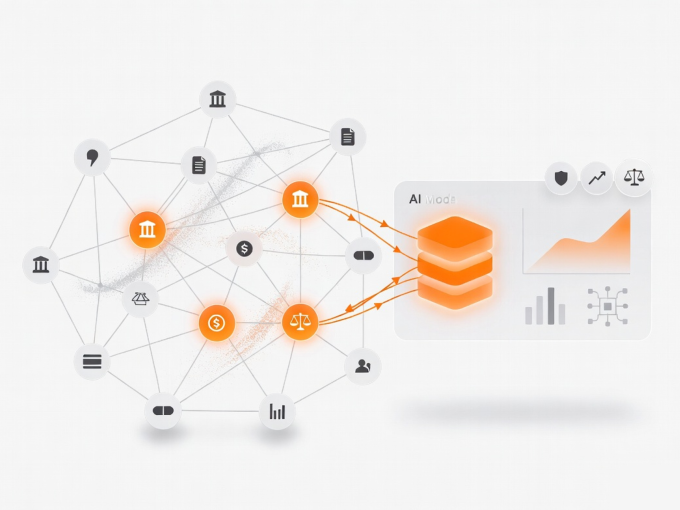
Think of the wrapper as enterprise AI’s traffic cop. Every single LLM call, OpenAI, Claude, Llama, Mistral, flows through one controlled gateway. No direct API keys scattered across GitHub repos and no shadow accounts.
What it actually does:
- Centralized model routing: wrapper.chat(“summarize contract”, model=”claude-3.7″) works identically whether you swap to GPT-5 or Llama-4 tomorrow
- Policy enforcement: Prompt injection filters, toxicity scoring, and PII redaction are applied universally before any token hits an LLM
- Permission gates: Finance agents access premium models; Marketing gets cost-optimized ones. Budgets stay locked.
Here, business logic decouples completely from providers. Your fraud detection agent doesn’t care if OpenAI goes down; wrapper routes to Anthropic seamlessly. Teams that implemented wrappers cut model costs through intelligent routing while boosting compliance audit pass rates.
The SDK Layer: Standardizing How Agents Are Built
The SDK is the shared foundation for enterprise AI, one approved way to build, deploy, and reuse agents across teams.
- Standard patterns: All agents follow consistent structures for planning, tool use, logging, and escalation.
- Reusable templates: Proven agents (onboarding, contract review, vendor checks) can be adapted across functions with minimal changes.
- Approved building blocks: Teams assemble agents from pre-vetted tools, memory modules, and safety controls.
The SDK becomes the default path: teams start from a catalog, contribute improvements back to a central library, and inherit governance automatically. Developers move faster, simple agents through low-code builders, complex ones through advanced configs without bypassing controls.
The Agentic AI Framework: Governing Agent Behavior at Scale
We don’t want single agents working in isolation for enterprises. Here, we need coordinated systems. The Agentic AI Framework governs how multiple agents collaborate in terms of their functions, with clear roles and permissions.
- Each agent operates within set boundaries. It follows approval rules and is managed across its full lifecycle.
- Complex workflows are handled easily, enabling agents to transfer tasks, request approvals, and bring risks to notice.
- They involve humans for high-risk decisions through built-in safety nets. They manage failures without breaking the system and trigger escalations when needed.
- The result is a single, resilient intelligence layer that moves faster without compromising control.
Why Every Enterprise Needs a Custom Agentic AI Framework and SDK
- One Standard Way to Build AI Agents
The framework enforces proven patterns like planning, tool selection, reasoning, and validation. A 2025 Gartner study found standardized AI patterns cut deployment time 45% while reducing errors 60%. - Reuse Agents Across Teams
HR’s onboarding agent becomes Sales’ vendor approval bot. When the same AI agents, templates, and components are reused across teams, the value compounds. - Better Control, Safety, and Governance
Custom frameworks embed ironclad guardrails:
Data access: Marketing agents see leads, never PII or financials Action limits: Agents suggest, humans approve wire transfers Human triggers: Confidence <75%? Escalates instantly Error recovery: Failed reasoning loops auto-retry with human notification - Easier Scaling as the Company Grows
When headcount doubles, AI usage explodes. Without governance, costs spiral 300%. The framework ensures:
New teams inherit working systems, don’t break them
Centralized billing caps rogue $100K/month LLM tabs
Predictable behavior across 100+ agents
Enterprise Use Cases Enabled by a Custom Agentic AI Framework
A custom agentic framework turns isolated AI tools into coordinated systems.
- Employee lifecycle management (HR + IT + Compliance): Shared agents help in onboarding, access provisioning, and regulatory checks using a single employee record. This may cut cycle times from days to hours.
- Finance operations and reporting: Reusable agents extract invoices, help in getting approvals, post journals, and generate reports. This may quicken the month-end close and prevent expensive errors.
- Customer and internal support: Triage, resolution, and escalation agents collaborate across customer support and IT helpdesk workflows, deflecting most tickets and reducing support headcount needs.
Conclusion: Chimera’s Capabilities
Chimera builds enterprise AI operating systems. Unlike fragmented LLM access, Chimera delivers the complete stack, custom wrappers, SDKs, and agentic frameworks, tailored to your org’s workflows, compliance needs, and scale requirements.
Proven capabilities:
- Reusable agents: Interdepartmental usage of Agents without wasting time in production.
- Orchestration: Multi-agent workflows with seamless transfers and escalation
- Standardization: One catalog, one SDK, zero governance issues
Ready to turn fragmented AI agents into a governed, reusable intelligence system?
Get in touch with Chimera and see how a custom agentic AI framework brings control, reuse, and real ROI without slowing teams down.